Salad (daun selada)hydroponic musim ke2 2012

Penanaman salad (daun selada) menggunakan sistem fertigasi dapat meningkatkan hasil tanaman selain itu juga...

Tray-semai 10hari

Penyemaian yang baik adalah dengan selalu meperhatikan media dan pH media pada kadar yang sesuai

Red pepper minggu ke-2

Penyemaian yang baik adalah dengan selalu meperhatikan media dan pH media pada kadar yang sesuai

System Fertigasi pada lahan terbuka

System fertigasi juga sangat baik diaplikasikan pada tanaman sayuran dan jenis berdaun seperti : Sawi, Salad, Kailan dan kangkung dan lain jenis

Cili Bara 3 minggu HST

Pohon akan tumbuh di polibeg antara 5-6 bulan. Setelah pohon dipindahkan ke polibeg, penggunaan baja fertigasi AB harus dimulai tetapi dengan penilaian 1.5 ec pengukuran baja menggunakan EC Meter.

Autopot System 2011

Container media tanam pada musim 2011 yang dipercayakan untuk kami kelola adalah menggunakan sistem autopot-fertigasi, sistem ini lebih hemat dan hasil yang lebih baik.

Showing posts with label innovasi. Show all posts

Friday, October 12, 2012

ORGANIC FARMING PART 6


HOW TO PREPARE OWN ORGANIC PESTICIDE AND FUNGICIDE
Gather plants with strong repelling odor and taste, like pungent (hot) pepper, black pepper, tobacco, onion, ginger, garlic, marigold, oregano, bitter vine, derris, neem, aloe vera, marigold, kamantigui, guava leaves, curry leaves, ipil-ipil leaves and seeds, madre de cacao leaves, castor bean seed, tuba-tuba leaves and seeds, adelfa and other plants that repel or kill insects and have fungicidal property.
a. Chop and place them in a blender with equal amount of water and blend or Pound and extract the juice or sap (fluid/liquid). For brew, boil the material, cool and separate the liquid tea.

b. Strain the liquid and mix one (1) teaspoon powdered detergent per litter and place in bottle as stock solution.

c. Upon spraying mix one (1) tablespoon of stock solution for every litter of water. (1 tbsp. per 10 ml. water) Dosage may be increased or decreased as you find its effectiveness to your crop.

Continued to PART 7

ORGANIC FARMING PART 5


KNOW ABOUT HERBAL PLANTS
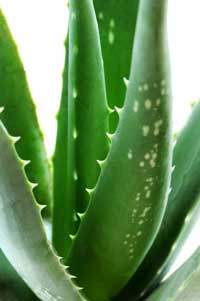
Aloe – [M.E.Aloe vera, one of the species contain manapol which contain vitamin, amino acid, macro and micronutrients and polysaccharides. It has an immunostimulant property. It contain a rich source of saponins which is toxic on herbivores, detergent, and destroy pathogen membranes. It has insect repellant, anti fungal, anti viral and anti bacterial property. The new compounds were found in the sterol fraction of the leaf. The presence of these agents in Aloe are very important. Campesterol, cholesterol, and B-sitosterol are plant sterols which possess chemical structures which are anti-inflammatory. Lupeol, a hydrochloride, is also an antiseptic and analgesic agent.
      In 1982, a University of Chicago Burn Center Report which will be examined in more detail later in this text recommended the presence of Salicylic Acid but adds that this aspirin-like compound is a breakdown product from aloin (barbaloin) found in the sap. Other researchers have identified the presence of small amountof Urea Nitrogen, another anti-microbial agent, in the sap.
      From the evidence obtain from research, one can postulate that Aloe vera works without toxic or allergic effects because of its nutrient and water content acts as a buffers.  The nutrients also are essential to tissue growth and function. The plant controls (or eliminates) infection because of natural antiseptic agents – Sulfur, Phenols, Lupeol, Salicylic Acid, Cinnamonic Acid, and Urea Nitrogen. It controls inflammation due to its anti-inflammatory fatty acids, Cholesterol, Campesterol and B-sitosterol, and it limits or stop pain because of its content of Lupeol, Salicylic Acid and Magnesium. Acting together, these agents and the leaves, other agents constitute the synergestic relationship. Thus, we see a rational explanation for the numerous reports that Aloe Vera eliminates many internal and external infections, limit or eliminates inflammation, and is highly effective pain killer.
      Chemistry explains Aloe’s ability to work as an effective treatment for burns, cuts, scrapes, and abrasions as well as for the treatment of many inflammatory conditions such as rheumatic fever, arthritis of all kinds, disorder of the skin, mouth, esophagus, stomach, small intestine, colon, and other internal organs such as the kidney, spleen, pancreas, and liver.
      It is important to remember that an anti-inflammatory and anti-bacterial agents are found in the sap and the rind of the plant, not in gel. At the same time one must not forget that the basic nutrient and other agents are widely dispersed throughout the plant – meaning the sap, the gel, and the rind. – and about 98% of the water is confined to the gel. This knowledge should help put pseudo-scientific fallacies to rest, especially the wide held myth that the gel of the plant is totally responsible for the healing ability of Aloe Vera. At the same time, we need not avoid an overreaction, which dismisses the gel as worthless. The gel is important as a buffering agent. Therefore, the theory of a synergistic relationship is the one, which is supportable with both history and science.
      At this point in our research for the truth, we have a chemical explanation of Aloe vera’s ability to heal through its capability to control or kill a number of disease causing microbes, to alleviate (or eliminate) pain, and to counteract inflammation.
      We know that it has been repeatedly stated that the plant has all these abilities, and more. As yet we have not even mention Aloe vera’s reported ability to eliminate excessive water from tissue, to aid digestion, to balance body acidity, to eliminate or greatly reduce scarring. To regenerate hair follicles, to return injured or damaged skin to its normal health color, or any other benefits that will be explored as we move from the theoretical back to the practical.

=========================================================================================
Neem Tree (Azadiracta indica)
Neem originated in the regions of Asia, India, Burma and Thailand. Now the tree grows in the tropical and arid regions in other parts of the globe. It is a fast growing tree adapts to semi-arid areas with 250 – 2000 mm rainfall per year. It can grow in poor soils but will not tolerate in high moisture soils and constant humidity.
Neem tree flowers are small and white. Fruit is oblong small in size about 2 cm long grows in bundles. Light green and turns yellow when ripe.  Many parts of the tree, from roots to fruits contain natural organic insecticide properties, which can be extracted and used by farmers and gardeners.
Preparing neem spray. Pound the leaves, bark or seeds at 1:2 ratio. Soak in  water overnight and use extract as spray for lepidopterous pests, bacterial wilt, nematodes, fruit flies, beetles, aphids and leaf hoppers. Cake can be used as mulch or mixed with soil to control bacteria, fungi and nematodes.
Uses of Neem:
a. As an insecticide, neem extracts from roots, bark, leaves and seeds have strong anti-feeding insecticide properties. Insects affected and sensitive to neem extracts are the following:

1. Coleoptera beetles about 20 species.
2. Diptera flies – 5 species.
3. Hemiptera bugs – 14 species.
4. Isoptera termites – 2 species.
5. Lepidoptera butterflies and moth – 25 species.
6. Orthoptera locust and grasshoppers – 5 species.

Insects that show resistance to neem extracts are scale insects, mealy bugs, bark eating caterpillars, and some pests infesting stored grains and seeds.
Neem extracts from leaves, fruits and bark have a strong repellant, anti-feedant and insecticide property. The Neem seed oil extract is a repellant to termites and nematodes. Extracts affect the food intake of insects, its digestion and physiological control mechanism (hormones) of insect growth that results in abnormalities in its molting process. Insect fertility is also affected, reducing greatly its fertile eggs.
b. The wood can be bused for lumber – construction. It is resistant to termites and woodworms. Wood chips can be used as paperboard, and excellent mulching material.

c. Use for greening urban communities, along roadsides and parks, provide shed, clean the air pollution, acting as wind breaker, serves as water shed and prevents soil erosion, green barrier against spread of forest fires.

d. Use as fodder for goats and sheep. It contains 15% protein and low in cellulose content.

e. It is also very good soil conditioner and organic fertilizer. Neem cake or fruit pulp mixed with urea or other commercial chemical fertilizers will help restrict the growth of denitrifying bacteria. This reduces the breakdown of nitrogen in fertilizers and optimizes the efficiency of fertilizers applied to the soil. Blending urea with Neem cake saves 20% of nitrogen fertilizer and increases yield by up to 15% in India. Neem cake significantly increases growth of azola and reduces insect (Pyralis sp.) infestation also in India.

f. The extracted juice is used as medicine. Effective treatment for septic wounds, ulcer, skin diseases, stomach worms and malaria. Pharmaceutical preparations as nimbidin, based ointment, soap, toothpaste, cosmetics, denaturant and edible fats.

g. The crude oil from seeds is used as lubricant. Neem seed oil mixed with soap and water is very effective spray against a wide range of insect pests. It is safe for bathing pets like dogs, cats and birds to dispel lice.

TOBACCO (BAR Chronicle July 2003)
      Tobacco has been used by man for various reasons. Today it is used more for smoking because of its addicting pleasure. Tit is also used as food and feed, insect pest and disease medication for animals, pets and poultry.
      “This is an herb of marvelous virtue against wounds, ulcers, herpes and all other things” says Jean Nicot in the 15th century, French ambassador to Portugal who introduced the tobacco plant to France. Today, our scientist continue research on tobacco. They confirmed that it has medicinal properties as antibacterial, antifungal, and topical analgesics. National Tobacco Administration (NTA) are formulating tobacco seed oil and leaf extract for medication.
      It has been reported in the DA-BAR Chronicle, that tobacco dust, if sprayed in liquid form, can be used in vegetable crops to kill insect pests such as golden snails, corm weevils, rain moths, and red flour beetle. Staunch advocates of organic farming are delighted with the beneficial uses of tobacco to control plant pests and diseases.
Other herbal plants
      The Philippine is very rich in different herbal plants that are suitable for pest and disease control. Some of them are discussed in this handbook.
ORGANIC FARMING
Organic farming is a form of agriculture which avoids or largely excludes the use of synthetic fertilizers and pesticides, plant growth regulators, and livestock feed additives. As far as possible, organic farmers rely on crop rotation, crop residues, animal manures and mechanical cultivation to maintain soil productivity and tilth (soil texture) to supply plant nutrients, and to control weeds, insects and other pests and diseases (pathogens).
According to the International Organic Farming Organization IFOAM, "The role of organic agriculture, whether in farming, processing, distribution, or consumption, is to sustain and enhance the health of ecosystems and organisms from the smallest in the soil to human beings."
Many of the above discussions on Natural Farming practices including most items on Integrated Pest Management are part of Organic Farming practices. In these following discussions, we will be introducing farming practices that will be focused on the use of organic materials instead of synthetic chemical products.


Continued to PART 6

sumber : ORGANIC FARMING

Thursday, October 11, 2012

ORGANIC FARMING PART 4


USE OF ORGANIC PEST AND DISEASE CONTROL MATERIALS
We have a long list of biological pest and disease control and prevention materials at the later part of this paper for your guide, in case you decide to make your own botanical organic pesticides and fungicides.
Research found Marigold to repel or eliminate nematodes within a meter radius from the plant. The roots give off chemical diffusate that is toxic to nematodes. Many other plants and herbs have been found to have insecticide and fungicidal properties. You may follow theses simple steps in preparing organic pest and disease extracts for your garden use:
PREPARING YOUR OWN PESTICIDE
While so many farmers are complaining of the high and even increasing cost of commercial agricultural chemicals, they can make and prepare their own with cheaper and available materials they can secure in their community or even grow in their own farm. Among these are the following:
1. Lime sulfur powder as natural fungicide

a. Secure 1-kilo very fine lime and 1-kilo sulfur powder.
b. Mix at 1:1 ratio.
c. Add 1-gallon water.
d. Bottle and seal tightly.
e. Spray to plants for the control of fungal diseases of both garden and farm crops.

2. Water is a universal solvent and cleaning agent. Home gardens with good water supply, while watering their plants can wash them with pressure hose to remove insect pests, fungus and bacterial infections. This practice is even done to big trees with power sprayers. Spraying clean water can wash off mites, ants, spider mites, and even fungal infections and other insect pests. With this practice many home gardens never use toxic chemicals to spray their plants against pests and diseases.

3. Sea Water is one source of good fungicide and insect repellant as well as providing the plant with added trace mineral elements. However it may need dilution with fresh water to reduce its toxicity to plants specially those with thin leaves and sensitive tissues.

4. Soap or Detergent and water

o Dissolve two (2) ounces soap flake to thee (3) gallons of water.
o Bottle the stock solution, ready for spraying. Soap washings may be used.
o Dissolve three- (3) tbs. of soap flake/powder in one (1) gallon of water. Soap washing may also be used.
o Spray the plants with the stock solution against insect pest attacking your garden plants. The soap solution is effective control against mites, aphids, ants and other garden insect pest. It can also control fungal infection.

5. Soap and Kerosene

a. Buy soap and kerosene from your local store.
b. Mix ¼ cup soap water + ¼ tbs. of kerosene + one liter water. Stir the mixture to form stock solution.
o Place stock solution in bottle ready for use. Use this solution when infestation is serious. Adding Malathion insecticide will help increase killing potency.
o Spray plants for the control of garden pests such as aphids, ants, mealy bugs, mites and spider mites, etc.

6. Soap and Aromatic Herbs

a. Collect / gather / wash and clean 1 Onion, 1 Garlic, 1 tbs. Hot Pepper.
b. Chop / cut materials into small pieces. Use grinder.
c. Pound / grind the different materials to extract juice.
d. Filter the different materials separately.
e. To the filtered juice of different materials, add 1-quart water. Let it stand for one hour and add 1-tbs. liquid soap detergent. Place the mixture in tightly covered jars and store in a cool dark place for a week as stock solution.
f. Bottles stock solution ready for botanical pesticide. Spraying garden plants with botanical pesticide. This spray makes use of the repellant quality of onion, garlic and pepper. The soap serves as sticker and spreader.

7. Vinegar

a. Buy vinegar from your local dealer. Bottle the vinegar as stock solution.
b. Spray plants with vinegar (stock solution) for the control of powdery mildew and other fungal diseases. Vinegar and other acids is good material for fungus eradication.

8. Vinegar + Fermented Sugar

a. Buy vinegar and sugar (brown or moscovado) from your local dealer
b. Mix the fermented sugar and vinegar at 1:1 ratio and place in bottle as tock solution.
c. Spray to plants stock solution for control of pest and fungal diseases.
d. Adding water and soap can help spread the stock solution but could dilute the material to be less effective.

9. Vegetable oil

a. Buy vegetable oil from your local dealer. This serves as stock solution.
b. Add water and soap (1 part oil + 5 parts water + ½ part soap) and spray to plant to control spider mites and scale insects.

10. Wood Ash

a. We can control root maggots in radish, cabbage, onion and other brassicas by spreading fresh wood ash around the plant roots. Ashes are then covered lightly with soil.
b. Wood ash can also control snails, slugs and cutworms by encircling plants with 3-4 inches wide trench, 1-2 inches deep and fill the trench with ash.
c. Spraying cucumber beetle with a mixture of equal parts of wood ash, powdered line and soap is an effective control.
d. Spray wood ash with water and soap can control flea beetle of tomatoes.

11. Vinegar and vinegar with fermented oil

Vinegar
a. Buy vinegar from your local dealer. Bottle the vinegar as stock solution.
b. Spray plants with vinegar (stock solution) for the control of powdery mildew and other fungal diseases. Vinegar and other acids are good material for fungus eradication.

12. Vinegar + Fermented Sugar

a. Vinegar and sugar (brown or moscovado) from your local dealer
b. Mix the fermented sugar and vinegar at 1:1 ratio and place in bottle as tock solution.
c. Adding water and soap can help spread the stock solution but could dilute the material to be less effective.
d. Spray to plants stock solution for control of pest and fungal diseases.

12. Crude oil

a. Buy crude oil from your local gas station dealer.
b. Mix soap and water to form your stock solution. (100 grams powder soap + 1 liter crud oil + 1 liter water).
c. Mix to stock solution to 16 liters of water and spray to plants against scale insects, mite, aphids and other insect pest and fungus.
  ========================================================================

continued to PART 5

Sumber : ORGANIC FARMING

ORGANIC FARMING PART 3


COMMON INSECT PESTS AND THEIR CONTROL
1. Whit Flies are aphid-like small insects that look like tiny moth. The nymphs are found in the underside of the leaves or covered parts of the plant as they try to avoid direct sunlight. Repeat treatment several times

      Control measures:
o Spray with soap and nicotine solution.
o Use tobacco dust.
o In every serious case, use kerosene emulsion with soap and water.
o Spraying or drenching plants with HOC-4n1 (Herbal Organic Concentrate) including the soil at the base of plants will reduce and eventually eliminate infestation.

2. Borers hatch inside the stem of plants, eat and grow inside as caterpillars. The branch or stem infested wilts and die.

Control by cutting off the infested stem and burn killing the pest. Periodic spraying plants with organic insecticide will help repel pests. Introduction ofTRICHOGRAMMA & BRACONIDS are very effective and self sustaining borer control. When established in the community, borers no longer can multiply and increase into pest population.
Spraying of HOC-3n1 (Herbal Organic Concentrate at weekly interval during flushing, flowering and fruit development stage will greatly reduce infestation until totally eliminated.]


.
3. Coffee Berry Borers (CBB) The 1.5 mm bark beetle spends its entire larval life inside the coffee berry, encases the coffee bean. Male mates inside the berry with females, but never emerge. Only the mated female emerge to fly to a new berry and bore into it to lay eggs and start the cycle anew. Only when the female fly out is it vulnerable to predators or chemical control.

Control is difficult with traditional and biological means.
A Fungus, Beauveria bassiana, attacks a wide range of insects, including CBB. The technique is to get the fungus in contact with the insect pest. The fungus can become ENDOPHYTIC – meaning, once introduced to the plant, it integrates with plant tissues. Four methods are employed. 1. Injecting it into the stem, 2. Spraying it on the leaves and other parts of the plant, 3. Soaking the seeds in it and 4. Drenching soil with it. The purpose is to make the fungus thrive in the plant so that the coffee berry borer can become exposed to it and be infected and die.
Spraying the coffee trees with HOC-3n1 (Herbal Organic Concentrate) once in 15 days will help reduce and eventually eliminate infestation.
4. Caterpillars feed on leaves and tender parts of the plant. Butterfly and moth underneath the leaves usually lay eggs.
      Control measures:
o Spray kerosene emulsion and wet the egg clusters to destroy them.
o Handpick the caterpillar and destroy them.
o Pick leaves with cluster of eggs and burn them.
o Introduce natural enemies in the environment like Braconids and other beneficial insects and predators.
o Spray and drench the plant with HOC-4n1 (Herbal Organic Concentrate) when pest are observed.

5. Cutworms attack newly transplanted vegetable seedlings or chew leaves and tender parts.
      Control measures:
o Check at night with flashlight and gather pest and mechanically destroy them.
o Cultivate and expose the soil of seedlings attacked by cutworm, locate them and destroy.
o Placing a stick or toothpick/matchstick at the side of the seedling stem buried will prevent cutworms from encircling cutting the stem.
o Spray or drench the plant with HOC-4n1 (Herbal Organic Concentrate) including the soil at the base of the plant.

6. Leaf miners are grub inside the leaf. It develops into pupa and drops into the ground. It causes minor damage to leaves
      Control measures:
o Herbs with strong smell repel adult’s flies and other insect pest. Intercropping or planting strong smelling herbs in your garden will lessen infestation.
o Chickens and birds feed on pupa in the ground. Making your garden and farm a haven for birds will help reduce insect infestation.
o If possible, plant trees bearing fruits and berries edible to birds in your farm. Maintain a watershed or mini forest for haven of wild life.
o Dusting wood ash  and HOP-3n1 (Herbal Organic Powder) on leaves will repel leaf miner fly.

7. Mealy bugs are scale insects covering stems and branches of plants, sucking its sap. This pest if not controlled early can destroy entire orchard.

      Control measures:
o Spray alcohol on the mealy bugs. It penetrates the waxy shell like protective cover, killing the insect.
o Spraying kerosene with tobacco and soap plus Malathion is effective for field control of orchard fruit trees like mango.
o Repeat spraying every week until the pest is totally under control.
o Weekly spray of HOC-3n1 (Herbal Organic Concentrate) for insect pests.

8. Fruit Flies are common and serious pest on fruits like mango, guava, jack fruit and other fruits and vegetables. The fly lays eggs into the fruit and hatch into maggot that burrow inside fruits. They eat up portion of the fruit and open it to secondary rot infection.

      Control measures:
o Gather all infested fruits and bury or burn them to destroy the pest.
o Use bait like methyl eugenol or hydrolicate with insecticide.
o Dip ripe fruits like aromatic guava, jack fruit in Malathion of other insecticides, and place them on branches of trees every 20 meters apart.
o Mix two teaspoon of household ammonia and ¼ teaspoon soap powder in a quart of water. Fill a jar with mixture and put the jar right nest to the sunny side of the plant. Change the bait once a week or if it is diluted by rainwater.
o Plant strong smelling herbal plants within your garden and farm.

9. Squash bugs lay eggs on squash. They develop into gray nymphs with fat bodies and black legs. They suck the sap of squash and other plants with tender shoots and flowers like mango.

      Control measures:
o Sprinkle the plant with hydrated lime or wood ash.
o Find the eggs and crush them.
o Trap them with a thin flat board place slightly tilted in the garden. The bugs assemble beneath the board where they can be gathered and destroyed.
o Spraying kerosene with tobacco and soap plus Malathion is effective for field control of orchard fruit trees like mango.
o Repeat spraying every week until the pest is totally under control.
o Spray HOC-3n1 on weekly interval.

10. Root maggot of flies laid its eggs near roots of plants like corn, vegetables. The hatched maggots feed on the roots, and weaken the plant. When in heavy population, they wilt and kill the plants.

      Control measures:
o Sprinkle wood ash around the stem of newly transplanted seedlings.
o Incorporate chopped marigold into the soil.
o Use organic fertilizers.
o Sprinkle HOP-3n1 (Herbal Organic Powder) for insect pests.

11. Aphids / Green / Black fly makes your plant looks spindly and pale. They attack the leaves and stem. Aphids can change color to match plant color. It Metamorphose from nymphs to adult, with or without wings. When they are over crowded, they develop wings and fly to neighboring plants of the same family. They have 12 days cycle to maturity.

      Control measures:
o Makabuhay (Tinospora rumphi) – Roots, stem and leaves liquid extract mix with water and soap is a good spray against flies, aphids, moth, worm and other insects.
o Atis (Anona squamos) seeds are grind into powder and mixed with water and soap. Use as spray on aphids.
o Spray HOC-3n1 on weekly interval until pest are controlled.


Continued to PART 4

Sumber : ORGANIC FARMING

ORGANIC FARMING PART 2


While the above practices are good and desirable, they have to be done in combination with modern agricultural technology to increase productivity per unit area at shorter possible time. This is because the farming and food production areas do not increase, while population continues to increase. Feeding the growing world population needs the ingenuity of man, his talent and ability to invent and innovate as his Creator endowed in him

1. Zero cultivation, following and allowing the soil to rest and rejuvenate.

Zero cultivation has been a long and original practice of man in its first attempt to grow crops. Even today, kaingineros, those who clear the forest or trees to grow seasonal crops do not cultivate the soil, since it is soft, friable and very fertile.
They just make small holes with pointed stick and drop seeds of rice, corn, vegetable or any crop they wish to grow. After one or two seasons, the soil hardens and hard to work on because of exposure to sunlight, necessitating soil cultivation, as the humus and organic content of the soil lessens. Then the farmer starts depending on commercial chemical fertilizers to replace nutrient loss. Unless organic compost materials are augmented to the soil, it will continue deteriorating.
To remedy the situation, following, or resting the field for one year, allowing all vegetation including weeds to grow, to bring back the natural fertility and bioorganic life into the soil. The use of organic fertilizer in combination to commercial chemical fertilizer will help preserve and sustain the productivity of the land. This has been the practice of ancient farming in Egypt, Babylon and Israel.
Tilling on the other hand promotes healthy soil in cultivated agricultural lands. It exposes the pest and soil born diseases, increases soil aeration and oxygen supply to microorganisms and promotes root growth and penetrates better as the soil is loose. This is done after destroying the natural soil environment through tillage.
In orchard farms (fruit tree plantations) where permanent trees are growing, zero tillage can be done, by growing low creeping leguminous cover crops like Arakis pintoy or Australian peanut weed (mani-mani) around and in between tree rows.

2. Practice clean culture.

Keeping the field clean will help in preventing the growth and multiplication of pest and diseases. All plant waste and droppings should be gathered in one place to be composted and converted into organic fertilizer. Before using the composted organic materials for fertilizer, sanitize them first by exposing them to direct sunlight and dried to eliminate any diseases and eggs of insect pests. Defoliate over mature and diseased and infested leaves. Allow sunlight and aeration to penetrate between plants and within the foliage of trees. It will promote the growth of normal and healthy branches and eliminate abnormalities.
Cultivation and weed control will also help not only in soil aeration and softening of soil mass but will also reduce or disturb the breeding place of insect pests and fungal diseases.
To bring back the natural organic matter, these materials have to be incorporated with the soil as organic fertilizer and manure.


3. Integrated Pest Management (IPM).

Integrated Pest Management (IPM) is a pest control program using combination of all practices to reduce or eliminate pest damage. This includes natural, biological and mechanical practices as well as bio and chemical pesticide application.
Among these practices include the following:
a. Planting resistant or tolerant plant varieties. Growing indigenous crop varieties with reasonably high productivity should be encouraged. New breeds and genetically modified plants are being developed like Bt Corn which are resistant to corn borer infestation. New pest and disease resistant with high nutrient food value varieties are being bred and produced through genetic engineering (GM) and natural cross breeding.
b. Timing planting so as the growing and fruiting stages does not coincide with inclement weather conditions and high incidence of pest population.
c. Growing boarder or inter-crops that are repellant to insect pests.
d. Practice clean culture, proper pruning and removal of diseases or infested plant parts especially with fruit trees. Remove all breeding places of insect pests and infected debris rotting near plants and field.
e. Use organic fertilizer in combination with chemical fertilizer and supplement the field with compost and pro-biotic (bacteria, yeast & fungus). Sanitize compost and organic materials by exposing them to direct sunlight before applying it as fertilizer.
f. Learn to prepare and use bioorganic pesticides and fungicides as substitute for toxic chemicals.

IPM may also include the following:
a. Keep the garden small and the plants varied to prevent insect pests infestation. Solo or mono cropping tends to encourage the multiplication and outbreak of insect pest that feed on the particular plant grown. Multiple cropping or maintaining a green belt in the farm where vegetation is allowed to grow naturally will be a shelter and home to beneficial organisms, plants and animals including variety of insects that will check and control any outbreak of pests. This will be a natural check and balance.

b. A basic principle in pest management: Plant the right crop on the right soil at the right time. Plant crops at a time when its particular pest is inactive.

c. Plant indigenous cultivars or plant varieties native to the place. They are resistant to the pests and adapt very well to the local environment. The introduction of hi-breeds and high yielding commercial seeds have the tendency of eliminating indigenous varieties that are adopted to the environment as they have survive decades and century of adjustments.

d. Healthy organic soil, grow healthy plants that resist pests and diseases. In soils applied with organic matter or humus, animal manure and compost, the soil host a wide variety of micro organisms that are harmful to nematodes and cause diseases to some insect pests thereby allowing the increase in population of beneficial organisms and insects.

e. Crop rotation dissociates microorganism buildup around the plant roots as each crop has a characteristic microbial association. (Example is pro biotic and nitrogen fixing bacteria for legumes). New microbes are being developed to inoculate the seeds just before planting to introduce them into the soil and help in nitrogen fixation that enriches the soil.

f. Aromatic herbs like mint, garlic, marigold, oregano, onion, control nematodes and repel insects, and should thus be grown as companion crop to your garden or farm.

g. Tilling promotes healthy soil as it allows aeration bringing supply of oxygen promoting root growth and permit better root penetration breaking soil compaction. It exposes pest and soil born diseases to sunlight and disturbs their growth and multiplication. Sunlight is a very good and free sanitizer.

h. Crop combination such as legumes and potatoes, control nematodes. Learn and find out the best crop partners and combinations. Planting tomatoes in between rows of eggplant will reduce fruit fly infestation on eggplant fruits. Growing marigold at the border of vegetable plots will also help repel some insect pests.

4. Insect traps, lure and attractants.

There are many practical and inexpensive ways of controling and managing the population of insects pests in your garden and fields. Here are some of them that you may adopt:
a. Light Traps - This practice have been found effective in unlighted areas. Light is provided with a basin of water. As the nocturnal insects are attracted to the light, they fly and dip into the water, or their wings are singed by the flame of the fire light.

b. Lure with attractants – The lures derived from molasses and flower scent (odor), tantalize both male and female moths (the caterpillar adult stage) with the promise of nectar. The insects fly into the opening of a lure-dispensing trap, never to return.

c. Chemical sex attractant – The use of PHEROMONE a chemical with female insect odor that confuses the male and attracts them to a bait treated with toxic insecticide or they fail to mate with the female insects.

d. Blue electric lamp surrounded with electrically charged mess wire that electrocutes insects upon contact.

e. Yellow pads – Most insect pests are attracted to bright yellow color. Yellow pad with grease or paste, attract insects during the day and sticks to the pad as they come in contact. The pad may also be treated with molasses and pesticide to give added attractant and killing potential.

5. Use of Biological Pest and Disease Control.

The use of living plant and animals or living organisms to  control pest and diseases are called Biological Control. They may be microorganisms such as bacteria, fungi, virus or bigger life forms like insects, worms, reptiles, mammal and birds. You can learn to increase the beneficial insects, microorganisms and other animal and plant life in your farms to counter pests and diseases harming your crops. Let us protect and increase these beneficial enemies of pests.
6. Use of Organic Fertilizer

Fertilizers coming from fermented and decomposed organic materials are very nutritious safe fertilizer materials. They both enrich the soil plant food nutrients, improves the texture for easier root growth and preserve the soil life such as beneficial bacteria and fungi. We have several recommended formula in preparing organic fertilizer both liquid and solid form in this handbook.
7. Used of Organic Pest and Disease Control

Herbal preparations to control pest and diseases can easily be made by farmers themselves since we have abundant plants in the Philippines that are suitable ingredient.
We offer you several formulations and methods of preparing Botanical or Herbal pest and diseases concoctions in this handbook to guide you make your own.
8. Use of indigenous resistant plant varieties and strain.

There are several plant varieties and species that are found resistant or tolerant to certain prevalent pest and diseases. It will be wise for farmers to know them and grow these type of plants specially during months or season that certain pest and diseases are abundant.
9. Practice crop rotation and following (resting the soil for some time).

Crop rotation or changing crops grown in certain areas to avoid the buildup of certain pest or disease affecting certain crops. Example, rotating onions with pepper or cassava. Resting the soil for one to two years to allow natural vegetation and the growth of natural enemies to introduce balance of nature, while enriching your soil environment for future crop production.
10. Growing and inter-cropping of pest repellant and herbal plants.

There are crops that repel certain insect pests. Intercropping tomato with cabbages and cauliflower will help reduce the diamondback moth attacking cabbages. Learn what these crop combinations. You will not only reduce your cost of pest and disease control but may even increase your income per unit area with the crop combination.
11. Integrated cropping pattern to prevent growth of toxic weeds.

Certain weeds are difficult to remove or control, like grasses. Planting vines and crawling crops like sweet potato and cover crops will help suppress weeds. Replacing the weeds with other beneficial creeping plants like Arakis pintoy (mani-mani) that covers the spaces between fruit trees and help supply nitrogen to the soil.
12. Growing the right crop on the right soil, climate and at the right time.

There are suitable crops that are ideal for certain season of the year and suitable soils for their healthy and productive growth. Learn the nature of the plants and their preferences before deciding what to grow in your farm. The Philippines is a located in the tropical zone, so ideal for tropical crops and not much for temperate crops. Let us learn the advantages we have by growing the right crops best suited to our land with good market demand.

Continued to PART 3

sumber : ORGANIC FARMING

ORGANIC FARMING PART 1


INTRODUCTION

      We can grow healthful food without depending too much on toxic chemicals and chemical fertilizers with NATURAL ORGANIC AND BIOLOGICAL FARMING systems.  The knowledge and simple but practical technology in this manuscript can save your crops and help you earn more from your garden and farm. Let’s return to the “Natural” ways. The growing market demand is for safe organically grown fruits and vegetables.
      It is not the intention of this paper to entirely eliminate the use of beneficial agricultural chemicals and fertilizers that help to suppress and control destructive pest and diseases and provide food nutrients to the plants. We also encourage the adoption of the latest improved technology and farming systems that are environmentally and ecologically friendly. We encourage farmers to adopt practical Integrated Pest Management (IPM)
      This paper will attempt to help and teach interested farmers adopt natural and practical farming systems that will reduce the use of costly and toxic agricultural chemicals and replace them with organic preparations the farmers themselves can produce and use. This can result to producing healthful organic food at lower cost with higher productivity as the soil and environment improves. This may be debatable, but possible and attainable.
      There is a worldwide shift for safe, chemical free food and a demand for organically grown food crops. The alarming increase in the use of toxic chemicals to control pests and diseases on both farm animals and plants has endangered the environment and reduce bio diversity as well as the health of consumers. We become too dependent like addicted people as the soil becomes poorer and insect pest become resistant to chemicals used.
      The world that we have created is dominated by a disregard for Nature and a greed that destroys for profit the environment, the ecosystem and the capacity of the land to produce without artificial human interventions.
      Useful insects and predators of pests are killed together with the insect pests with the wide and intensive use of toxic agricultural chemicals. The surviving pest finds no natural enemies, thus they increase rapidly resulting in more destructive infestation with more resistant pest to chemical control. We have to recognize the natural laws, governing and balance of nature, its biodiversity and life itself.
      These simplified guides can help farmers reduce their production cost and become self reliant with renewable crop protection products they can grow and formulate in their own farms, together with their commercial crops and livestock. They can also make their own fertilizers and soil amendments that will turn their land into productive farms. This can make farmers self reliant and self sustaining
      Through Natural Farming, we can feed the increasing population of the world with healthful food free from toxic chemical residue.
NATURAL FARMING
      To understand natural farming we need to know the cycle of life and matter. Natural farming as we envision is learning nature’s laws, and using them with care. Take note:Natural Laws are the laws of God who created Nature.
      Natural farming is a culture where plants are grown in 100% natural environment with the least human interference and no harmful chemicals or synthetic products used. It is practically leaving the crops grow and produce in their natural environment, and man comes enhances the natural conditions to improve productivity. Then, harvest or gather its products for man’s use. However, in the context of our discussion, we will be introducing farming systems that will employ and apply more and more organic and biological farm practices.
      Dr. Saturnina Halos, an agricultural scientist says: “Strictly speaking, farming interferes with nature. There are a lot of human interventions in farming.” This is very true, and if we are not careful enough, we may totally lost natures’ resources and capacity to produce the food that our growing population needs. We seek to learn natural organic and biological farming to safeguard the environment and sustain its productive capability.
      While there is a growing demand for organically grown fruits and vegetables, it is difficult and almost impossible not to use chemical products to increase the production per unit area in a shorter period of time to meet the growing food demand of the increasing population. Besides plant roots and leaves can only absorb nutrients in their chemical form. Organic materials have first to be broken down into its basic chemical component to be utilized by plants. Synthetic chemical products being used in Agriculture were processed and synthesized from organic and/or mineral materials.
       Before life was created, matter first existed. In the beginning we have water, rocks, gases, light, solar energy, the earth and atmosphere. There was yet no life. (Read the Holy Scriptures ‘The Holy Bible’ Genesis on Creation). When the environment became ready, life began to appear in many forms from single cell to the complex form of plants and animals. We learn that evolution is God’s continuing process of creation.
      Matter on the other hand is never lost, it just change in form and substance from solid to liquid and gas and back to solid. From its mineral chemical form to organic compound and back to mineral and chemical. (Remember man that thou art dust and unto dust thou shall return.). Roots absorb nutrient in simple chemical form decomposed organic compounds have to be converted to chemical form and are absorbed by plants.
      Evolution as science discovers, life started in the waters in single cell microorganisms in animal and plant form. In ages and millennium the seed of life developed into higher forms as we see them today. Together with life or biological progression, weathering of the environment prepared the development of ecological diversity. So even at our time, we witness the continuing process of creation and evolution of new varieties and forms of life.
      Man with his God given intellect is an instrument in the development through the science of breeding and lately genetic engineering and cloning. Man’s technological advances are still following natural laws, which without that, it will be impossible.  
      If we observe the growth and vegetation of natural forests, we will notice the healthy growth of trees, shrubs, grass and other forest vegetation. The soil is fertile, rich in organic humus and there is very limited pest and disease damage. Animal life, also abound from microorganisms like bacteria, fungus to worms, reptiles, birds and mammals.
      The plants and animals have grown in their natural environment without interference of man. They may not be as productive as we wish them to be, but we can learn from their growth, survival and production in their natural habitat. Ecological and biological diversity can be observed existing and living in harmony.
o The soil is kept fertile with the leaves, branches and other plant parts that mature and drop to the soil surface are decomposed with the aid of bacteria, fungi and other minute organisms that eat and digest them up with moisture (water). This results to the buildup of humus and organic fertilizer, which break down into simple chemical form rich in readily available plant nutrients for roots to absorb.

o Beneficial microorganisms abound in the fertile organic rich soil that help both in the decomposition of organic materials and suppress or control the spread and multiplication of pests and diseases. Probiotics or beneficial microorganisms help suppress and control the growth of disease causing microbes (bacteria, fungus and virus) and even soil born pests like nematodes and insects.

o Insect pests are kept down as both destructive and friendly insects are balancing their population in their natural habitat. This control the buildup of insect infestation is a continued process when left to their natural estate. Example of these are: the use of Trichogramma ostriniae against corn corer and Braconidae or Braconid Wasps which parasitize other arthropods. Braconid wasps can be endo- or ecto-parasite, solitary or living in groups as primary or secondary parasites. Different species may attack every stage of an insect development; there are braconids that are egg parasites, larval parasites, and parasites of pupae and adult insects. Many parasites are valuable as biological control of pests.

o Big and tall trees protect the soil and other living organisms beneath from too much heat and inclement weather conditions. Soil erosion and depletion is minimized or totally prevented. Trees serve as umbrella in forest and natural habitat. Tree planting in certain sections of the farm is advisable and encouraged. Keep and grow spots of mini forest in your farm to preserve and protect the environment and eco system for the habitation of bio diversity.

o The environment is preserved as bio-diversity is protected in natural forest vegetation where man has not set its foot on. All of creation and living things have a purpose and role. Herbal and medicinal plants have been destroyed and eliminated with the past century of clearing and cultivating lands for agriculture and crop production.

o Zero tillage is propagating plants without the artificial means of cultivation. Plants and seeds are spread by growth of rhizomes, vines, carried by wind, water and birds. Modern natural farming systems can learn much from nature’s way of propagating and preserving its species even without the usual land clearing and land preparation involving digging, plowing and harrowing.

o Following is a farming practice by ancient farmers up to the 50s where the land is made to rest for a year or two to allow nature to rejuvenate it and enrich the soil fertility and productive capacity. Resting the soil for one year after six years of crop production. Today, this is less practiced due to the limited farming areas. Farmlands are chopped down by CARP into small lots 3 hectares and smaller. Farmers need to make them produce continually without resting, so artificial methods are done to keep it producing using chemical and organic fertilizers.

      To adopt natural farming system, we have to understand how the ecosystem responds to man’s interventions. The moment we clear the land, remove the protective trees and cultivate the soil, we have destroyed the natural environment and the existing eco-system and bio-diversity. The lesser we destroy or remove the natural environment; the closer we get into natural farming.
      However, we can gradually return to natural ways by learning the natural laws governing plant and animal propagation, growth and production.
Some practices now being done and promoted as natural farming practices:
1. Zero cultivation and following, allowing the soil to rest and rejuvenate.
2. Integrated Pest Management (IPM).
3. Insect traps, lure and attractants.
4. Use of Biological pest control (natural enemies of pest)
5. Use of Organic Compost fertilizer and bio micro inoculant.
6. Use of Organic Pest and Disease control materials.
7. Use of indigenous resistant plant varieties and strain.
8. Practice crop rotation and following (resting the soil for some time).
9. Growing and inter-cropping of pest repellant and herbal plants.
10. Integrated cropping pattern to prevent growth of toxic weeds.
11. Growing the right crop on the right soil, climate and at the right time.


continued to....PART 2

sumber : ORGANIC FARMING

Wednesday, October 10, 2012

CARA MEMBUAT KOMPOS


CARA MEMBUAT KOMPOS

Metode sandwich:


a. Bahan organik seperti kotoran hewan, limbah pabrik dan humus ditempatkan dalam lapisan satu di atas yang lain sampai mereka mencapai tinggi 3 meter.
b. Materi yang disiram lembab dan ditutupi dengan daun kelapa atau lembaran plastik agar kelembaban akan dipertahankan.
c. Campur pil kompos setelah dua minggu, lembab dan tutup lagi.
d. Ulangi pencampuran seminggu sekali, sampai bahan kompos yang benar-benar terurai dengan penampilan tanah.
e. Kering di bawah sinar matahari langsung untuk membunuh atau menghilangkan mikroorganisme yang tidak diinginkan seperti jamur dan bakteri.
f. Bahan ini sekarang siap untuk digunakan atau ditempatkan dalam karung untuk penyimpanan atau pengiriman.

Biologi cepat kompos:


a. Mengumpulkan bahan organik, memotong atau hammer mill dan aduk rata.
b. Air mereka basah dengan pro-biotik mikroorganisme (lactobacilli atau Trichoderma) dicampur dalam air.
b. Tutup tumpukan kompos dengan lembaran plastik.
c. Campur bahan setiap minggu.
d. Ini biasanya akan mengambil hanya 4 minggu untuk benar-benar membusuk materi dengan bantuan mikroorganisme yang membantu mencerna bahan selulosa.
e. Sundry bahan organik terurai (pupuk) untuk membunuh mikroorganisme yang tidak diinginkan.
f. Bahan ini sekarang siap untuk digunakan atau mengantongi untuk penyimpanan atau pengiriman.

Lapangan kompos:


a. Setelah panen dan sebelum membajak dan persiapan lahan, mengumpulkan bahan organik, memotong atau hammer mill.
b. Menyebarkan materi merata di lapangan. Dalam kasus sisa tanaman limbah berada di lapangan, maka langkah a. tidak akan diperlukan.
c. Semprotkan bahan organik di lapangan dengan pro-biotik mikroorganisme.
d. Membajak dan disk harrow lapangan untuk mencampur bahan organik dengan tanah.
e. Jika memungkinkan melakukan operasi di atas hanya sebelum hujan diharapkan atau mengairi lapangan setelah membajak budidaya. Hal ini akan memungkinkan mikroorganisme untuk bekerja cepat, dan berkembang biak. Dalam prosesnya, mencerna bahan organik menjadi pupuk organik atau amandemen tanah.

Perhatikan bahwa pro-biotik organisme akan terus bekerja di tanah, asalkan kondisi yang menguntungkan seperti kelembaban tanah yang memadai dan adanya bahan organik.

Langkah-langkah dalam pengomposan dengan bunga matahari liar:


1. Carilah daerah yang cocok, sebagian atau seluruhnya berbayang.
2. Mengumpulkan bahan kompos seperti jerami padi, pupuk kandang, dan limbah pertanian lainnya.
3. Kumpulkan bunga matahari liar dan memotong batang muda dan daun menjadi potongan-potongan kecil.
4. Tetap bambu dengan lubang untuk melayani sebagai ventilator dari tumpukan kompos.
5. Tanaman tumpukan residu dan limbah pertanian di urutan berikut: jerami padi, bunga matahari, pupuk kandang, tanah dan ulangi layering. Proporsi: 2-3 bagian bunga matahari segar, 1 bagian jerami padi, pupuk kandang 2 bagian dan 1 bagian tanah.
6. Air tumpukan sampai tercampur basah.
7. Tutup tumpukan dengan daun, karung atau lembaran plastik untuk meminimalkan penguapan.
8. Periksa kelembaban setiap 2 hari, dan basah dalam kasus kompos kering.
9. Periksa juga suhu. Jika hangat, maka dekomposisi berlangsung.
10. Setelah 3 sampai 4 minggu, periksa tumpukan compose dan jika itu telah berubah menjadi humus tanah bentuk fisik kemungkinan besar matang.
11. Dalam hal compose tidak akan secara langsung dapat digunakan, udara kering sebelum menempatkan ke dalam karung atau di tempat kering yang teduh.

Petani didorong untuk menerapkan cara-cara sederhana dan murah untuk memproduksi pupuk organik melalui penggunaan teknologi asli. Mereka mungkin mengadopsi metode lain kompos dengan menggunakan bahan-bahan lain dan limbah tanaman yang tersedia di peternakan masing-masing.

source : www.freewebs.com

System pemasangan pipa Fertigasi


Salah satu contoh system pemasangan pipa fertigasi untuk kapasitas 1000 polybag

Tuesday, October 9, 2012

BAJA CAIR ORGANIK IMO


BAJA CAIR ORGANIK IMO


Untuk pembaikan pokok sebagai tambahan kesuburan dan ketahanan penyakit , baja cecair organik buleh di gunakan sebagai foliar spray dan juga siraman pada media, unsur baja yang terdapat dengan bantuan microbes IMO memudahkan di serap oleh daun dan akar, microbes yang terkandung dan bahan2 lain sebagai anti penyakit di gunakan sebagai pencegahan penyakit pokok.Bahan untuk membuat baja organik atau biofertilizer spt berikut: Kadar bahan bergantung banyak mana nak di gunakan, jadi kita buleh ganda atau kurangkan ikut kadar yang di tetapkan.

1. Air kencing lembu 5 lit atau kalu air kencing sendiri pun buleh atau kombinasi, kalau tak ada buleh gunakan air baja organik pelet jenis yang baik spt Super Green Organic Fertilizer keluaran Twin Arrow Organic S/B, 1 lit di perap 2 malam dalam 5 lit air ( ganti air kencing atau campuran keduanya).
2. Setengah ( 1/2) lit air tebu fresh
3. 1 lit air gula merah dari 1 cawan gula merah
4. 5 lit air kelapa tua ( tadah kat pat proses santan),
5. 2 lit air basuhan beras ( perap 1 malam)
6. 100ml EM pure atau 200ml campuran FPJ,FFJ,FAA atau IMO2 atau 1 lit AACT pure atau 50-100gm Plantbact
7. 250gm setiap satu : lengkuas, halia, kunyit, temu lawak, cekur ( option), daun mamboo ( campur buah pun buleh)
8. 50gm kulit kayu manis dan 100 gm batang wali
9. 250gm serbuk ikan ( buleh gunakan kepala ikan bilis yang hancur2 tu )
10. jika ada rumpai laut fresh atau kering b uleh di campur sekadar 1 cawan yang di blender.
11. untuk tambahan Ca, buleh gunakan kulit telur kisar halus, atau kulit kerang bakar dan kisar.

kesemua bahan kasar tu di kisar atau tumbuk lumat, masukan dalam tong ( buleh gunakan tong sampah bertutup) masukan bahan cecair lain dan kacau biar serata dan sebati, peraplah selama 3-4 minggu, 2 atau 3 hari sekali kacau supaya serata.Penggunaannya, di tapis untuk dapatkan stok baja dan simpan dalam bekas ditutp longgar,
Untuk foliar gunakan 1:20 ( cek EC supaya tidak melebihi 2 ) dan untuk siraman 1:30, gunakan setiap 7-10 hari sekali sebagi pembajaan dan juga melawan penyakit secara NF.


BAJA ORGANIK UNTUK FOLIAR


Formula ni di gunakan secara meluas di mexico dalam NF mereka, feedback dari mereka amat baik.Penyediaannya agak simple, menggunakan bahan yang mudah,gunakan tong biru 200 lit yang ada tutup kedap udara.

BAHAN A

Bahan asas:
50 lit tahi lembu fresh ( kalu ada orang sembeleh ambil rumput separa hadam dari perut ( rumen) lembu 50 lit ( agak2 lah).

2 kg rock dust di jadikan serbuk halus ( kalu ada zeolite terbaik...di tumbuk hancur halus )

2 kg abu dari pembakaran kayu ( bukan arang tapi debu abu)

1 kg serbuk kelp > kalu tak ada gunakan rumpai laut fresh 3kg atau kering 1 kg di kisar halus)

100 lit air tanpa klorin

BAHAN B

50 lit air tanpa klorin

2 lit susu fresh ( kalu buleh dari perahan asli ...nak kena beli ngan benggali)

2 lit molasses atau gula merah 3 kg di cairkan 2 lit air

500 gm serbuk ragi ( yang buat tapai ) atau buleh guna yeast -( yang buat roti) di blender hancur ngan 2 cawan air.

1/2 lit sourdough ( bancuhkan air ngan tepung gandum dan sedikit ragi perap satu malam)

cara buat:


dalam bekas besar ( tong sampah besar) masukan 50 lit air, campur susu, campur gula merah cair, campur ragi dan campur sour dough,kacau rata2 sampai sebati.
untuk Bahan B masukan 50 lit tahi lembu dalam tong biru yang berisi 100lit airmasukan rockdust, abu kayu, dan rumpai laut, kacau biar sebati.opsen>>>>buleh gunakan serbuk kulit telur atau kerang 1/2 lit untuk dapatkan Ca, buleh tambah juga serbuk tulang 1/2 lit, darah lembu atau ayam 1/2- 1 lit, hampas soya 1 lit, ikan cincang atau perut ikan atau buangan ikan blender 1 lit ) ---opsen tu idea saya sendiri untuk tambahbaikan nutrients ).Campurkan bahan dari bancuhan B kedalam tong bancuhan A, kacau biar sebati dan serata semua.biarkan ada ruang paling kurang 6 inci dari penutup tong dan bahan.
Pada penutup drum, tebuk lubang dan pasangakan soket ( buleh guna L shape 16mm tube connector dan ruber goumet,) gunakan tube 16mm sambung kat connector, hujung satu tu masukan dalam botol mineral 1 lit di isi 1/2 air, biarkan ujung tube tenggelam dalam air, dan gantung botol tu lebih tinggi sikit dari drum, bila gas dari tong keluar, ia akan di lepaskan dalam air, jadi tak ada udara luar masuk.tutup drum biat ketat dan kedap udaraBiarkan fermentasi selama 2-3 bulan...lagi lama lagi baik, macam wine lahnak guna kacau dan tapis, campuran 1:30 untuk foliar spray dan 1:50 untuk siram media

created by muhammad abdul rahman at 1malaysia fertigation group

Tuesday, October 2, 2012

Teknik Pembuatan Arang Sekam 2

1. PENDAHULUAN

          Arang sekam merupakan salah satu alat untuk membuat media tanam. Sekam terbuat dari pembakaran kulit padi, di buat menjadi arang sekam sebagai salah satu  media tanam sistem hidroponik. Selain pemanfaatan limbah padi, limbah padi tersebut bisa juga di jadikan media tanam , banyak tanaman yang hasil produksinya lebih baik dibandingkan menggunakan media lain ,keunggulan media arang sekam adalah bisa digunakan beberapa kali untuk digunakan. Selain tidak kotor arang sekam dapat menyimpan air cukup lama dibandingkan tanah biasa , muadah dalam pembuatan serta mudah dalam penyerapan dalam melakukan penyiraman . Penggunaan arang sekam cukup efisien dibandingkan dengan menggunakan media lainarang sekam 2sekam padi
Langkah Kerja :
  •  Amati drum dan periksa keutuhannya    Drum yang baik untuk tungku adalah berasal dari plat eser      
  •  Lubangi bagian atas dan bawah dengan   tatah pada bagian pinggir drum    Bagian atas penutup digunakan untuk penutup tungku dan bagian bawah digunakan untuk sarang      
  •  Buat lubang bentuk segiempat berukuran L 22 CM, T 26 cm, pada bagian bawah drum yang berfungsi sebagi mulut tungku    Mulut tungku adalah lubang pembakaran dan pengeluaran arang sekam      
  • Buat 8 lubang berukuran garis tengah 1 cm pada ketinggian 32 cm dari bawah drum    Lubang-lubang ini dibuat untuk menempelkan 2 pasang besi begel sebagai penahan sarangan      
  • Potongan besi begel berukuran panjang 65 cm sebanyak 4 batang, dan masukan dalam lubang dengan posisi berpasangan menyilang    Dengan memasang besi begel, dapat menahan sarangan sekaligus menahan tekanan sekam      
  •  Pasang sarangan di atas besi begel yang telah di beri lubang bergaris tengah 15 cm pada tengah-tengahnya.    Sarangan berguna menahan sekam agar tidak langsung turun kebawah/dasar, adapun lubang pada sarangan adalah lubang pembakaran sekam   

2. Prinsip kerja tungku

            Pinsip kerja tungku yang di buat drum bekas ini adalah seperti  prinsip keja lampu tempel, yaitu pembakaran pada bagian tengah dalam badan tungku, dari bawah sampai dengan keatas bentuk silindris.

3. Prosesnya

  • Masukkan paralon di tengah-tengah drum pada lubang sarangan
  • Sekam masukkan ke dalam drum ½ bagian sambil di padatkan dan kasih minyak tanah sedikit
  • Masukkan lagi sekam semuanya sampai penuh  
  • Setelah drum terisi penuh paralon dicabut, sehingga nampak lubang di bagian tengah berbentuk silindris
  • Sekam dibakar dari bawah, pembakaran dapat dengan mudah berlangsung hal ini di karenakan selain sekam kering, juga karena di beri minyak tanah sedikit,di samping itu karena udara yang masuk ke dalam drum melalui mulut tungku naik keatas sehingga proses pembakaran menjadi cepat.
  • Sekam yang tebakar sedikit demi sedikit akan jatuh kebawah sambil di bulak balik menjadi arang sekam
  • Arang sekam yang terlah berwarna hitan di keluarkan menggunakan sekop
  • Arang sekam tersebut di siram dengan air bersih, supaya arang sekam tadi tidak menjadi abu
  • Arang sekam telah di siram dengan air, kemudian masukkan kedalam karung.


4. Waktu      

Ø    1 Karung sekam 45 menit
Ø    2 Karung sekam hasilnya menjadi 1 karung arang sekam
Ø    Pembuatan arang sekam dengan menggunakan tungku dilakukan oleh 2 orang

Monday, October 1, 2012

Pembuatan Sekam bakar (husk charcoal)

Sekam adalah sisa atau limbah penggilingan padi yang dahulu kurang dimanfaatkan, paling-paling hanya dipakai ganjel – alas- kayu bakar waktu memasak. Keberadaannya di penggilingan padi semakin menggunung, mengganggu lingkungan dan kesehatan manusia. Sekarang sekam mulai banyak yang dimanfaatkan sebagai campuran pembuatan dan bahan bakar batu bata, bahkan sudah ada juga yang di buat briket arang sekam, selain dibuat briket, arang sekam juga bisa digunakan untuk media tanam sayuran dan tanaman hias karena mempunyai sifat porous dan mampu mengikat air.
Arang sekam dapat dibuat dengan peralatan yang sederhana, mudah dan murah tetapi sebenarnya mempunyai hasil yang bernilai ekonomis terbukti sudah banyak yang menjual arang sekam. Hal ini bisa digunakan sebagai usaha sampingan untuk menambah pendapatan.

Alat dan Bahan:
1.      Cerobong asap, bagian bawah berkaki
2.      Air satu ember
3.      Koran bekas dan korek api
4.      Sekam 3 sag bekas pupuk urea


Cara Pembuatan:
1.      Cerobong asap diberi koran bekas dan dibakar
2.      Tuangkan sekam ke sekeliling cerobong asap sedikit demi sedikit sampai habis.
- Bila asap keluar dari cerobong semakin banyak berarti pembakaran sekam terjadi dengan baik.


- Setelah + 3 jam sekam sudah terbakar semua (ditandai dengan sekam bagian luar terbakar merata dan tidak semua asap keluar melalui cerobong)


Pembakaran sekam sudah cukup terus disiram dengan air sampai bara sekam mati. Arang sekam dimasukkan kedalam sag bekas wadah sekam, biasanya 3 sag sekam menjadi + 2 sag arang sekam.

“Selamat Berusaha”

Monday, September 24, 2012

Fish Amino Acid ( FAA )


Fish Amino Acid ( FAA ) adalah cecair dari proses pereputan ikan yang menghasilkan asid amino, iaitu komponen penting dari proten. FAA merupakan penghasilan yang baik untuk kehidupan dan pertumbuhan microbes dan juga pokok tumbuhan, kerana mengandungi pelbagai nutrient dan berbagai jenis asid amino dan component protein lain untuk kebaikan pokok.
 

CARA MEMBUAT FAA ( versi lain sedikit dari kebiasaan )

    Alat:
    Wadah kaca atau plastic atau wadah tanah liat ( clay pot)
    Kain jarang, ( kain lampin, kain kasa, )
    Tali atau getah pengikat
    Bahan:
    Ikan segar dari jenis belakang hitam, tulang2 ikan segar ( buangan dari pembuatan kropok),
    Udang atau kulit udang
    Isi siput gondang emas ( mudah di dapati)

    Gula merah ( brown sugar), IMO4, (kalu tak ada IMO4 buleh guna IMO2 dan air beras yang di fermentetasi 3 hari ), OHN ( bawang putih, kumcui, tungkui, kayu manis, jahe) di campur sekali 5 jenis tu.
    ( bahan di atas spt udang, siput buleh campur jika ada)
 
Jenis ikan :
    Terbaiknya jenis belakang hitam spt sardine, cincaru, kembung, tongkol (aya), tamban
    selar, tuna, ikan bilis ( fresh), ikan mata besar ( lolong ) ikian pelata dan ikan2 seangkatan.
    Ikan belakang hitam ini mengandungi proten yang tinggi dan baik, asid amino dan juga asid lemak ( fatty asid). Mengandungi EPA dan DHA yang banyak dan asid lemak yang tak tepu yang terbaik untuk kesihatan.
    Kedua2 bahan DHA dan EPA bertindak menurunkan tahap kolestrol dan dan menghalang penyakit darah tinggi dan berkaitan dengan penyakit jantung dan strok.
    Mencerdaskan otak kanak2, dengan memberi oksigen pada otak, mengurangkan penyakit pelupa pada orang tua, mengandungi pelbagai vitamins untuk kebaikan kesihatan dan mengurangkan terjadinya penyakit ketuaan dan kaitan kekurangan vitamis, bahan2 terkandung dalam ikan itu juga amat baik dan di perlukan oleh pokok untuk kebaikan dan kesuburan  

Cara Membuat

    Basuh ikan menggunakan air tanpa klorin, cincang kecil2 sebesar ibu jari  termasuk kepala, tulang dan perut.
    Ikan cincang di gaul dengan ¾ jumlah gula merah, dan di masukkan dalam wadah, dengan 2/3  isi padu wadah.
    Gaulkan ¼ gula merah tadi dengan IMO4 dan taburkan dalam wadah diatas bahan ikan cincang itu untuk memudahkan pengoposan isi ikan dan juga minyak ikan , (jika menggunakan IMO2, campur sekali air basuhan beras yang sudah di fermented 3 hari ), masukkan juga sedikit OHN ( campuran berbagai ) yang di cairkan 1:5 , gunakan 100ml untuk 1kg bahan ikan, kandungan gula merah dan bahan ikan sama berat 1:1
    Tutup wadah dengan kain dan ikat denagn sempurna dan pastikan 1/3 ruang di atas bahan ikan.
    Dalam masa 3-4 hari, bahan ikan mula mencair di sebabkan tekanan osmotic oleh gula merah, dan terjadinya proses fermentasi.
    Dalam masa sebualan jus dari fermentasi buleh di gunakan jika perlu walaupun tak semau ikan hancur. Kebiasaannya ikan akan hancur denag sempurna dalam masa 5-6 bulan, dan amat bagus kulitinya berbanding  fermentation 1 bulan.
FAA yang sudah matang berbau masam manis dan tidak membusuk, tapis dan boleh di simpan tempat teduh dan sejuk.

Bagaimana menggunakan FAA

    Fish Amino Acid (FAA) buleh di gunakan selepas di cairkan dengan air bersih tanpa klorin dengan kadar 1:500-1000.
    FAA kaya dengan nitrogen N merupakan baja yang bagus untuk siraman atau semburan foliar untuk mempertingkatkan pertumbuhan semasa fasa vegetative bila di gabungkan dengan pembajaan lain spt menggunakan MOL2 lain dalam kaedah NF.
    Jika kita membuat IMO untuk di gunakan pada proses pengoposan bahan organic, campuran FAA yang di cairkan 1:500 akan mempertingkatkan activity microbes dan perceoatkan proses pengoposan.
    Untuk sayuran berdaun, menggunakan FAA 1:1000 secara berterusan akan meningkatkan hasil dan memberi rasa yang enak dan ber aroma .
    Disebabkan FAA kaya dengan unsur N , tidak di galakan menggunakan semasa production stage kerana akan meningkatkan pertumbuhan vegetative dan mengurangkan production, tetapi amat baik jika di gunakan sebagai booster untuk aktikan balik pertumbuhan jika masa production pokok lambat berkembang cabang Y…buleh di lakukan hanya 3 -4 minggu sekali.
    Sesetengah FAA yang mengandungi minyak ikan hasil fermentasi akan mengeluarkan bau yang agak ketara, dan ini merupakan sebagai repellent terhadap sesetengah serangga spt lalat putih dan lain2.
    FAA dari ikan sardine dan tongkol amat baik untuk menghalau hamama dan juga lalat putih bila larutan di spray pada daun atas permukaan atas dan bawah.
    Jika terdapat tulang2 ikan yang tidak hancur selepas di tapis, masukan kedalam brown rice vinegar atau cuka nipah akan mengoposkan tulang dan menghasilkan calcium phosphate yang berkualiti dan sedia terlarut.

Fungsi-fungsi Fish Amino Acid ( FAA )

    Mengatasi stress

    Stress seperti suhu tinggi, kelembapan rendah atau kekeringan, serangan hamama atau serangga, hujan berlebihan ( lembab),  banjir dan kekurangan nutrients memberi efek negatif pada metabolisme tanaman dan akan membantutkan kualiti dan penghasilan tanaman. Penggunaan amino asid semasa penanaman secara berterusan akan mengubah fisiologi tanaman denagn pengawalan dan penghindaran stress menjadikan pokok sentiuasa dalam keadaan baik dan subur dan berupaya menentang penyakit.

    Pengaruh Fotosintesis

    Untuk kesuburan pokok, karbohidrat di sintesiskan oleh prosess fotosintesis, pada peringkat fotosintesis yang rendah mengakibatkan pertumbuhan yang lambat dan menyebabkan kebantutan dan kematian tanaman, klorofil adalah molekul yang bertanggung jawab untuk penyerapan tenaga cahaya. Glumate acid dan glisine merupakan enzime untuk proses sintesis dan pembentukan klorofil pada daun. Asid amino ini membantu untuk meningkatkan konsentrasi klorofil dan memantapkan proses fotosintesis lebih tinggi. Hal ini membuat tanaman menghijau dan subur bila proses sintesis berlaku secara maksima.

    Tindakan pada Stomata

    Stomata adalah struktur selular yang mengontrol atau mengawal  keseimbangan hydro atau air dalam  tanaman, penyerapan unsur makro dan mikro nutrients dan penyerapan udara. Pembukaan dan penutupan stomata dikendalikan oleh dua faktor external (cahaya, kelembaban, suhu dan konsentrasi garam) dan faktor internal (konsentrasi amino asid, abscisic acid dan lain2). Stomata akan menutup ketika cahaya dan kelembaban rendah atau kering dan juga jika keadaan suhu dan konsentrasi garam yang tinggi, ketika stomata tertutup proses fotosintesis dan transpirasi atau perpeluhan berkurang dan berlaku penyerapan yang rendah pada unsur baja makro dan mikro dan respirasi meningkat yang memerlukan tenaga dari kabohidrat. Dalam hal ini keseimbangan metabolisme tanaman adalah negatif. Catabolism ( penguraian protein dan kabohidrat) lebih tinggi dari anabolisme. Ini berarti metabolisme lambat dan menghentikan pertumbuhan tanaman. Asid L-glutamat bertindak sebagai agen osmotic citoplasm  dari sel pengawal. Penggunaan amino acid akan memudahkan pembukaan stomata dengan pengawalan dari keseimbangan catabolism.

    Chelating Effect Amino Acid

    Amino acid merupakan agen chelating atau pengurai untuk micronutrients. Penggunaan bersama atau sebagai siraman atau campuran dalam tangki baja memudahkan, penyerapan dan transportation zat2 micro nutrients oleh akar dan pokok. Effect ini  disebabkan tindakan asid dapat mengawal serapan dan permiability cell membrane dengan pertolongan dari acid  L - Glycine dan L - glutamate yang terkenal sebagai chelating agen yang sangat effective.
    Amino Acid dan & phytohormones
    Amino acid merupakan precussor atau aktivator dari phytohormones dan zat pertumbuhan. L - Metionine merupakan precussor dari ethylene dan faktor pertumbuhan seperti Espermine dan Espermidine, yang di synsthesized dari 5 - Adenosyl Metionine. L - Triptophane ( sebahagian dari AA) adalah precussor untuk sintesis Auksin. Triptophane tersedia hanya jika hidrolisis protein dilakukan oleh enzim.

    Pembuahan dan Pembentukan Buah .

    Pembuahan adalah perpindahan putik sari ke bunga putik buah, sehingga terjadinya pembentukan buah . L – Proline ( komponen AA) membantu dalam kesuburan pollen. L - Lysine, L - Metionine, L - glutamate adalah komponen amino asid yang esential untuk pembuahan. Amino asid meningkatkan kadar pembentukan putik sari dan pembesaran kantung polen.
    Keseimbangan Microbes Tanah
    Keseimbangan microbe tanah pertanian merupakan asas yang baik untuk penguraian dan peroses mineralisation untuk menguraikan bahan organik dan juga structure tanah untuk melepaskan unsur baja pada pokok dalam bentuk yang mudah di serap. L-metionine salah satu komponen dari AA adalah faktor pertumbuhan precussor yang menstabilkan dinding sel microbes dalam proses penguraian.
    Sehubungan dengan itu, penggunaan FAA atau amino acid amat baik untuk menentukan kesuburan pokok yang meksima dan ketahan dari penyakit, serta untuk penghasilan buah yang berkualiti dan meningkatkan production.

Twitter Delicious Facebook Digg Stumbleupon Favorites More